


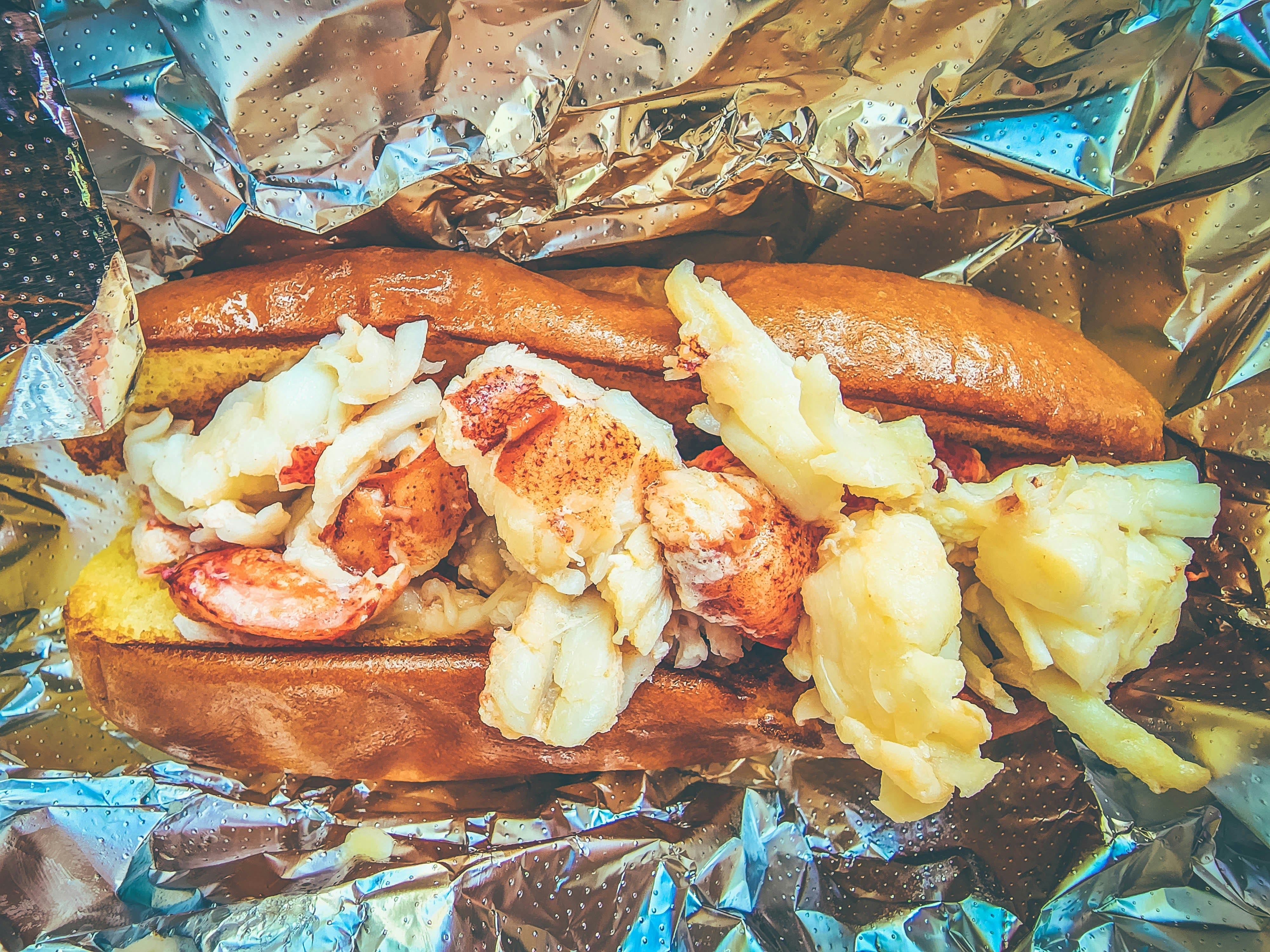
There are foods best eaten during the summer: grilled burgers, soft serve, thick slices of watermelon. And then there’s the lobster roll.
I ate my first lobster roll as an adult, a Texan visiting Boston. This was a long time ago. I was shocked and delighted by the (at the time) inexpensive bite. It was summer, and the lobster roll was perfect: chunks of sweet lobster meat---delicate knuckle and claw meat only, not the chewier, fleshier tail---tossed with mayo, crisp celery, a squirt of lemon, all served, to go, on a toasted, buttered hot dog bun.
The history of lobster is well known: once upon a time, lobsters were considered trash food, meant for prisoners or dogs. But then, slowly, over decades, it went through one of culinary history’s greatest glow-ups thanks to things like refrigeration, canning and good ol’ fashioned marketing. The lobster roll itself was shack food, fast, roadside eats. It was the popular way locals and tourists consumed the crustacean, which was plentiful off the Northeast’s shores.
Growing up, lobster was another word for “expensive,” what the rich ate, alongside caviar, champagne, and diamonds. But in New England, this delicacy was casually served on the kind of bread you’d find at ballparks and backyard cookouts. As a Texan, I thought New Englanders mostly ate hot chowder by the bowlful. Little did I know. And now, years later, I can’t start summer without a lobster roll.
With lobster roll season upon us, I asked a few random experts—a.k.a. folks who know a thing or two about lobsters—a simple question: what makes for a perfect lobster roll?
A few of my favorite recent lobster rolls are at The Dutch in SoHo (the béarnaise aioli is like super mayo) and the aptly named Lobster Roll Restaurant way out in Southampton (their “classic” is the platonic ideal, tbh).
But I’m a “sit on a picnic bench and eat lobster rolls with two hands”-type. I’ll let the pros explain.
“I think freshness and hand-picking your meat daily. Totally different texture, totally different flavor. To me, that’s it, along with simplicity,” says Orion Russell, executive chef of Greenpoint Fish & Lobster. “A bad lobster roll is frozen meat that has been shredded up to death and tastes like tuna fish.”
In case you don’t know (maybe you’re from Texas, too?), lobster rolls are divided into two distinct tribes: there are the cold lobster salads of the Massachusetts coast, and then there are the hot buttered lobster rolls of Connecticut. Personally, lobster rolls are not a binary. Do you have to choose? No. But if you want some help, Orion offers this advice: “It’s kind of weather dependent. It’s a chilly, rainy day; I want a hot butter roll. If it’s 100 degrees and sunny, like, please give me the mayo, cold mayo.”
For Nick Tamburo, chef-owner of Smithereens in the East Village, the question isn’t temperature but proportion. “Most would say a great lobster roll is about abundance. I’d say it’s about balance. A warm bun, cold lobster, a nice amount of lemon,” he says. “Our lobster roll at Smithereens is a little different in that we try to squeeze in as much lobster flavor as possible by making a lobster mayo and lobster butter with the shells.”
Then there’s the architecture. “Like any good sandwich, the bread is critical. Traditional New England top-split buns are best: white bread, buttered, nicely toasted, and served warm. Brioche buns are overkill, and their richness takes away from the focus, which should always be the lobster meat,” says David Seigal, VP, Culinary Director of LP Hospitality Group.
He adds: “Simplicity is key for traditional Maine-style lobster rolls. They don’t need any ‘special’ ingredients (crunchy toppings, yuzu replacing lemon, exotic spices, or things of that nature). Mayo, celery, lemon, maybe scallion, but that’s all.”
“I’ve always felt like lobster rolls have always been about finding that perfect balance of just enough meat to make it feel luxurious, but not so much that it’s too expensive,” says Zach Brooks, general manager of Smorgasburg LA. Of course, there’s a catch, and the catch is money. Lobster rolls have become trendy, and therefore, pricey. “One of my most vivid lobster roll memories of all time was the two-lobster-roll lunch special at Charlie’s Kitchen in Harvard Square,” says Zach. “I swear it was $10 (maybe $12) in 1999 and came with fries too.”
Ten dollars. Two lobster rolls. With fries. Somewhere, a hedge fund manager just spent forty dollars on one and called it a steal.
Bree Birns, co-owner of McLoons Lobster Shack in South Thomaston, Maine, echoes the fundamentals: fresh seafood, butter-toasted split-top bun. She follows up: “A little swipe of mayo and some warm butter to drizzle on top.” Wait. Mayo and butter? Isn’t that blasphemy? Like rooting for the Red Sox and the Yankees?
“I guess we kind of take the best of both worlds,” she says.